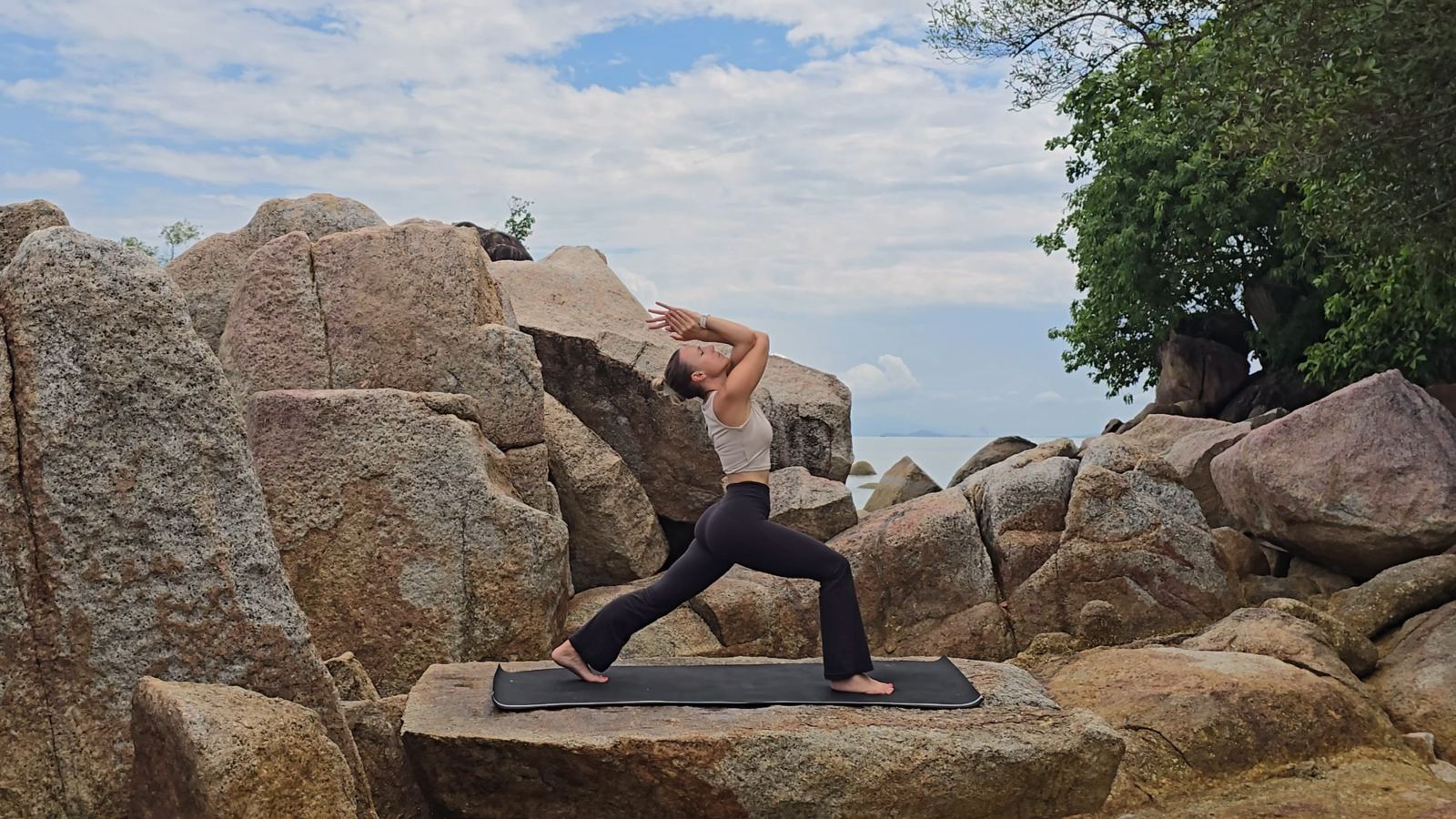
People ask me this all the time, expecting one correct answer. There isn't one. Your body behaves differently depending on the time of day, and each window has a real, physiological reason to favor it. The right time to practice is the one that matches what you need from the session, and realistically, the one you'll actually stick to. I've practiced at every hour of the day over the years, so here's what I've learned about each one.
Morning: building heat from a cold start
Your body is naturally stiffer first thing in the morning. Spinal discs are more hydrated after a night lying flat, connective tissue is cooler, and your nervous system is just coming out of rest mode. This makes morning practice better suited to slower, more deliberate movement that gradually builds heat rather than deep, aggressive stretching right away.
The upside of morning practice is consistency. Willpower is highest earlier in the day before decision fatigue sets in, which is part of why people who practice in the morning tend to maintain the habit longer than those who plan to practice at night.
Midday: working with a body that's already warm
By midday, your core temperature has risen and your joints have had hours to loosen through normal movement. This is genuinely the easiest time to access deeper stretches and more demanding poses. The tradeoff is logistics. Carving out 20 minutes in the middle of a workday is harder for most people than protecting a slot before or after work.
If your schedule allows for it, even a short midday reset can do something a morning or evening session can't: it interrupts a day of sitting and gives your nervous system a clean break before you go back into work mode.
Evening: practicing for the nervous system, not the muscles
Evening practice serves a different purpose entirely. By the end of the day, most people aren't short on flexibility, they're short on a way to downshift out of a stressed or overstimulated state. Slower paced flows in the evening lower heart rate, reduce cortisol, and signal to your body that the day is closing. This is less about deep stretching and more about transition.
If you only build one habit, build a fixed time slot, not a fixed best time. The research on adherence is clear: people who practice at the same time each day stick with it far longer than people who practice "whenever there's time."
Matching the session to the slot
- Morning: slower full body flows that build heat gradually, good for setting the tone of the day.
- Midday: short, energizing sessions that break up sitting and reset focus.
- Evening: calming, slower paced flows aimed at winding the nervous system down before sleep.
None of these is more legitimate than the others. The only wrong time to practice is the one you can't actually keep showing up for. Pick the slot your real schedule protects, not the one that sounds best in theory, and build from there. That's exactly why I cued my flows the way I did, short and poetic, with no long winded talking. So whatever window you find, you can drop in and move without losing the thread.